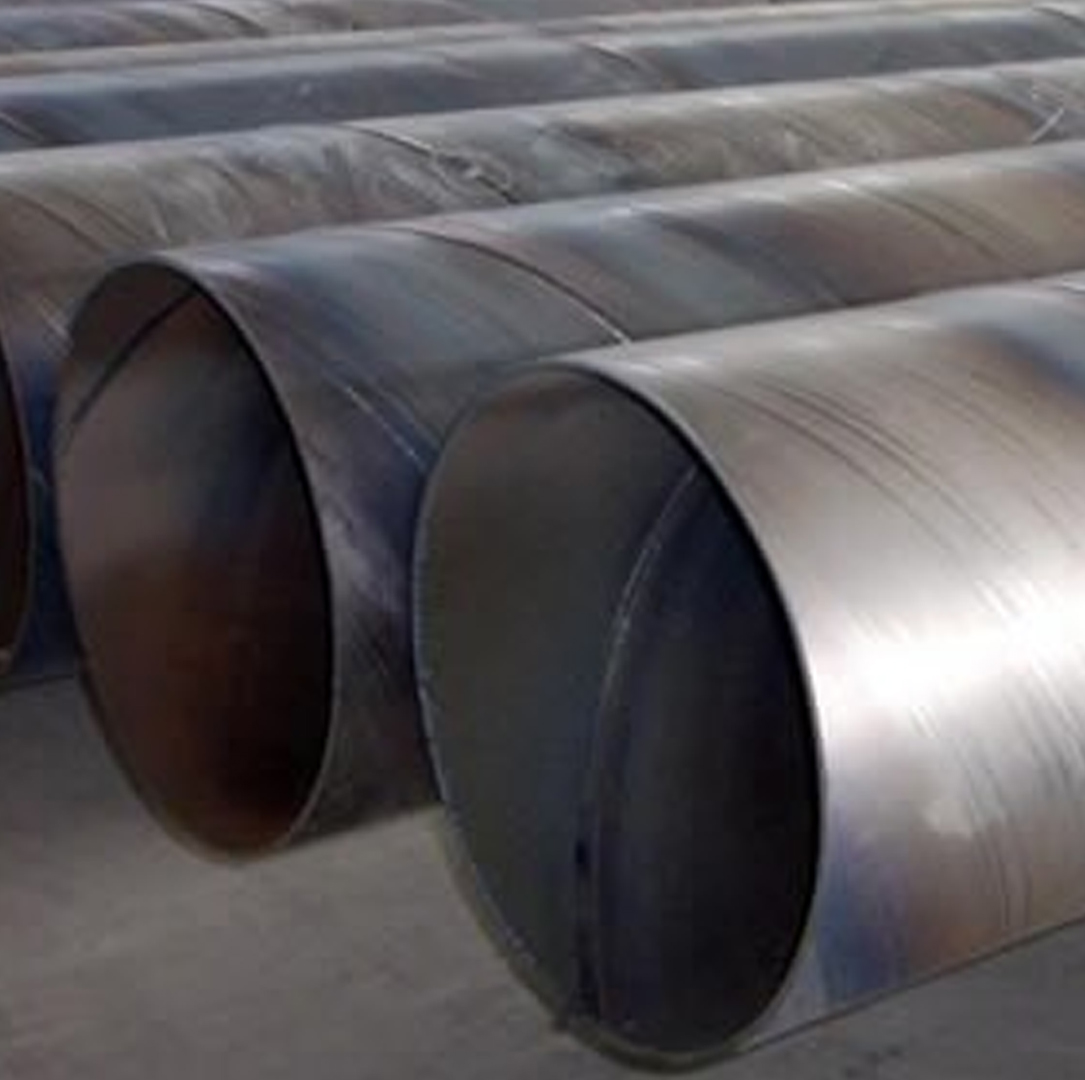
HSAW Pipe
HSAW Pipe, or Helical Submerged Arc Welded Pipe, is a steel pipe manufactured by forming steel strip or plate into a helical cylindrical shape and joining the edges using the Submerged Arc Welding (SAW) process.
HSAW pipes are commonly associated with large-diameter pipeline applications such as water transmission, sewage systems, industrial pipelines, infrastructure projects, slurry transportation, and selected oil and gas applications.
HSAW pipe selection depends on the required steel grade, outside diameter, wall thickness, applicable product standard, design pressure, service conditions, welding requirements, testing, coating, and project specifications.
What Is an HSAW Pipe?
HSAW stands for Helical Submerged Arc Welding.
An HSAW Pipe is produced by forming steel strip or plate into a helical or spiral shape and welding the adjoining edges using submerged arc welding.
Because the weld seam follows a helical path around the pipe, HSAW pipe is also commonly described as:
- Helical Submerged Arc Welded Pipe
- Spiral Submerged Arc Welded Pipe
- Spiral Welded Steel Pipe
- HSAW Steel Pipe
- Spiral SAW Pipe
In many industrial contexts, HSAW and SSAW refer to the same general type of helical/spiral submerged arc welded pipe.
For technical procurement, however, the complete manufacturing method and applicable product standard should always be stated.
What Does Helical Submerged Arc Welded Mean?
Helical Submerged Arc Welded describes both the orientation of the weld and the welding process.
Helical
The steel strip or plate is formed into a cylindrical shape along a spiral path. Consequently, the weld seam follows a helical path around the pipe.
Submerged Arc Welded
The pipe edges are joined using the Submerged Arc Welding process. During SAW, the welding arc operates beneath a layer of granular flux.
This combination produces a pipe commonly referred to as an HSAW Pipe.
Key Features of HSAW Pipe
Important characteristics include:
- Helical welded construction
- Submerged arc welding process
- Suitable for large-diameter pipe production
- Available in different steel grades
- Available in different wall thicknesses
- Suitable for water and infrastructure pipelines
- Can be supplied with internal or external coating where required
- Can undergo hydrostatic testing
- NDT can be performed according to applicable requirements
- Material and weld traceability can be maintained
- Suitable for project-specific dimensional requirements
Actual pipe performance depends on the selected material, dimensions, manufacturing quality, weld quality, coating system, service conditions, and applicable standard.
HSAW Pipe Applications
HSAW pipes are commonly considered for large-diameter pipeline applications.
Water Transmission
Applications may include:
- Raw water pipelines
- Water transmission pipelines
- Municipal water infrastructure
- Industrial water systems
- Water treatment plants
Sewage and Wastewater
HSAW pipe can be considered for:
- Sewage transmission
- Wastewater pipelines
- Municipal sewage systems
- Treatment plant pipelines
Oil and Gas
Suitable HSAW pipe manufactured to the applicable line-pipe specification may be considered for:
- Pipeline systems
- Hydrocarbon transportation
- Gathering systems
- Transmission-related applications
The applicable line-pipe standard and project requirements must be confirmed before selection.
Slurry Pipelines
HSAW pipes may be considered for certain slurry transportation systems where the material, wall thickness, internal protection, and design are appropriate.
Infrastructure Projects
Applications can include:
- Large-diameter utility pipelines
- Industrial infrastructure
- Water infrastructure
- Pipeline crossings
- Certain piling or structural applications
Structural applications should be evaluated according to the relevant structural specification.
HSAW Pipe for Water Pipeline
HSAW pipe is commonly associated with large-diameter water transmission projects.
When selecting HSAW pipe for water service, consider:
- Design pressure
- Operating pressure
- Pipe diameter
- Wall thickness
- Water chemistry
- Internal lining
- External coating
- Jointing method
- Installation environment
- Corrosion protection
The complete pipeline system should be designed rather than selecting pipe solely based on diameter.
HSAW Pipe for Oil and Gas
HSAW pipe may be used for certain oil and gas pipeline applications when it meets the required line-pipe standard and project specification.
Important considerations include:
- Applicable API/ISO or other line-pipe standard
- Steel grade
- Diameter
- Wall thickness
- Design pressure
- Operating temperature
- Impact toughness
- Weld quality
- NDT requirements
- Hydrostatic testing
- Coating
- Material traceability
For critical pipeline service, the project specification and applicable engineering code take precedence over generic product descriptions.
Why Consider Spark Steel?
For HSAW pipe procurement, Spark Steel can focus on matching the pipe with the customer's technical requirement.
The procurement process can consider:
- Correct steel grade
- Applicable product standard
- Pipe dimensions
- HSAW construction
- Welding requirements
- Weld inspection
- NDT
- Hydrostatic testing
- Coating
- Material traceability
- Quality documentation
- Delivery requirements
This helps establish a clear technical basis before procurement.
Frequently Asked Questions About HSAW Pipe
Ready to place an order?
We supply premium quality steel products for every industrial application. Call us or send an enquiry and our team will respond within 24 hours.