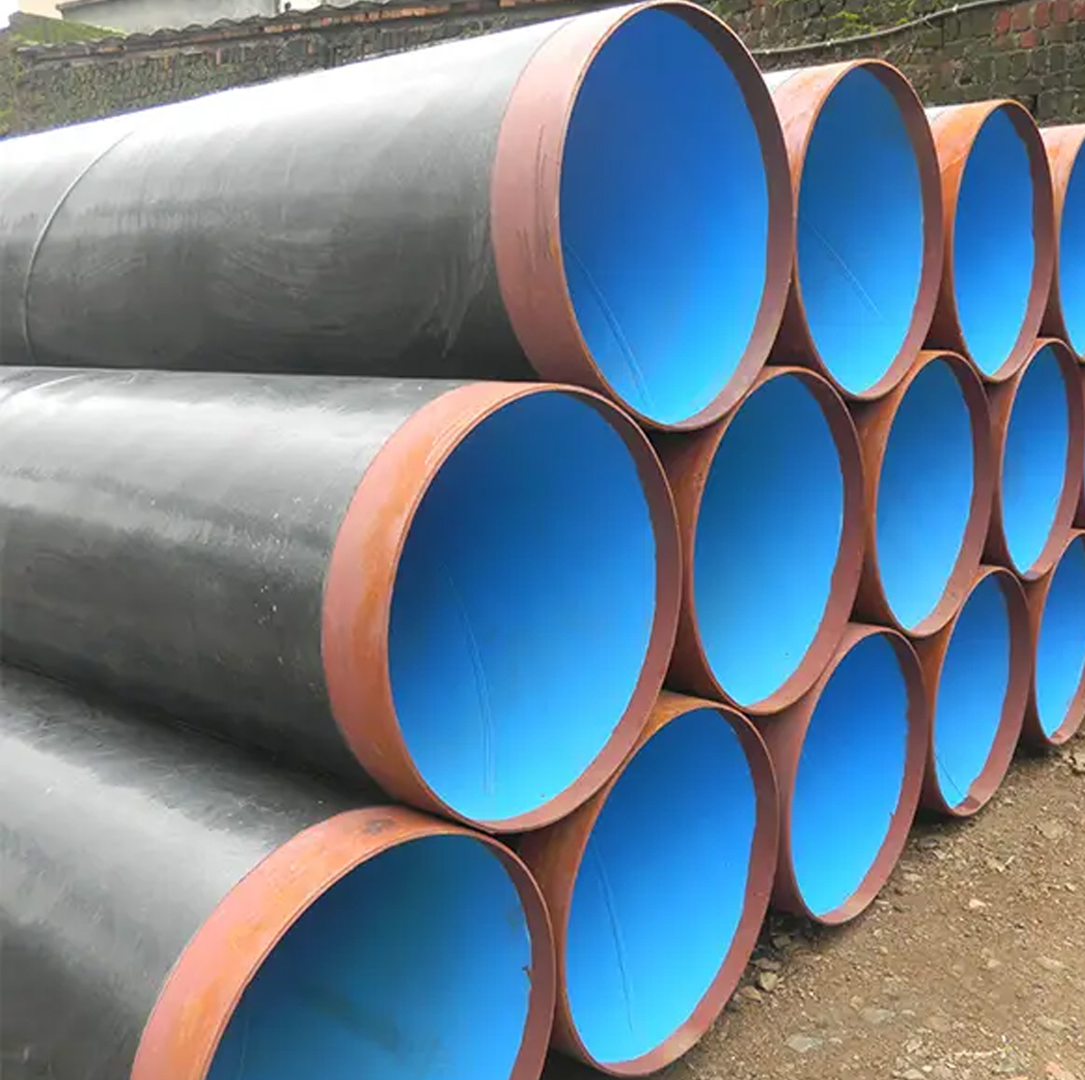
FBE Coated Pipe
FBE coated pipe is a steel pipe protected with an external Fusion Bonded Epoxy (FBE) coating. FBE is a thermoset powder coating system applied to a properly prepared steel surface and heated so that the powder melts, flows, and cures to form a continuous protective coating.
FBE coating is widely used for external corrosion protection of steel pipelines and pipe components. It can provide a combination of corrosion resistance, adhesion, and protection against the surrounding environment when properly specified and applied.
The appropriate FBE coating system depends on the pipe material, dimensions, service environment, operating temperature, installation conditions, coating specification, and applicable project standards.
Spark Steel can support project-specific requirements for steel pipes and coating solutions, subject to technical and commercial confirmation.
What Is FBE Coating?
FBE stands for Fusion Bonded Epoxy.
Unlike conventional liquid paint systems, FBE is generally supplied as a dry powder. During application, the powder is electrostatically applied to a prepared and heated steel surface. The powder melts and chemically cures, forming a bonded epoxy coating.
The coating acts as a barrier between the steel substrate and the external environment.
Main functions of FBE coating include:
- External corrosion protection
- Strong adhesion to properly prepared steel
- Protection from moisture and environmental exposure
- Resistance to many chemicals and corrosive environments
- Uniform coating coverage
- Protection of steel pipeline surfaces
Actual performance depends on the coating formulation, application procedure, surface preparation, service conditions, and quality control.
How Does FBE Coating Work?
A typical FBE coating process involves several controlled stages.
- Surface Preparation
The steel pipe is cleaned using an appropriate surface-preparation process to remove contaminants, mill scale, rust, oil, and other substances that could negatively affect coating adhesion. - Pipe Heating
The prepared steel pipe is heated to the temperature required by the selected FBE coating system. - Powder Application
Dry epoxy powder is applied to the heated steel surface, commonly using an electrostatic spray process. - Fusion and Curing
The powder melts, flows over the surface, and cures to form a continuous epoxy coating. - Cooling
After the coating has cured, the pipe is allowed to cool under controlled conditions. - Inspection
The finished coating is inspected according to the applicable project specification. Inspection can include visual examination, coating thickness measurement, holiday detection, adhesion-related testing, and other specified quality checks.
Key Features of FBE Coated Pipe
FBE coated pipes can offer several technical benefits when the coating is correctly selected and applied.
- Corrosion Protection
The cured epoxy layer helps isolate the steel surface from external moisture and corrosive environments. - Strong Adhesion
Proper surface preparation and controlled application can produce strong bonding between the epoxy coating and steel substrate. - Continuous Coating
The application process can produce a relatively uniform protective layer over the pipe surface. - Chemical Resistance
FBE systems can provide resistance to a range of chemical environments, depending on the specific formulation and service conditions. - Mechanical Protection
The cured epoxy coating provides protection against certain forms of surface damage. However, the mechanical performance depends on the selected coating system and installation conditions. - Pipeline Applications
FBE is commonly used for external protection of steel pipelines and related components.
FBE Coated Pipe Applications
FBE coated pipes are commonly considered for applications where external corrosion protection is required.
Major applications include:
- Oil and gas pipelines
- Water pipelines
- Natural gas transportation
- Petrochemical pipelines
- Industrial pipelines
- Underground pipeline systems
- Process piping
- Utility pipelines
- Slurry pipelines
- Pipeline infrastructure
- Steel pipe fittings and related components
The suitability of FBE depends on the service environment, operating temperature, installation method, soil conditions, and project requirements.
FBE Coated Pipe for Underground Applications
FBE coating is commonly used as an external protective coating for underground steel pipelines.
After installation, the coating helps separate the steel surface from surrounding soil and moisture. However, pipeline corrosion protection is normally considered as a complete system that may also involve cathodic protection, coating quality, field-joint protection, inspection, and proper installation.
For underground applications, the project specification should define:
- Coating system
- Surface preparation
- Coating thickness
- Inspection requirements
- Holiday detection requirements
- Repair procedures
- Field-joint coating system
- Cathodic protection requirements
- Backfilling and installation requirements
Advantages of FBE Coated Pipe
External Corrosion Protection
FBE creates a protective barrier between steel and the surrounding environment.
Strong Steel-to-Coating Bond
Proper surface preparation and application are important for achieving effective adhesion.
Uniform Factory Application
Controlled coating facilities can help maintain consistent application conditions.
Good Chemical Resistance
Depending on formulation, FBE can resist exposure to various chemicals and environmental conditions.
Suitable for Pipeline Infrastructure
FBE is commonly specified for steel pipeline systems and associated components.
Can Be Used With Cathodic Protection
FBE-coated pipeline systems can be designed as part of an overall corrosion-control strategy that includes cathodic protection where required.
FBE Coating Process and Quality Control
Quality control is an important part of FBE pipe coating because coating performance depends heavily on surface preparation and application conditions.
Surface Preparation Inspection
The steel surface should be inspected before coating to verify the required cleanliness and surface profile.
Preheating Inspection
Pipe temperature should be controlled according to the requirements of the selected FBE coating system.
Powder Application Monitoring
Application parameters should be controlled to achieve the specified coating characteristics.
Coating Thickness Measurement
The finished coating can be checked to verify compliance with the specified thickness.
Visual Inspection
The coating should be examined for visible defects, damage, discontinuities, contamination, and other imperfections.
Holiday Detection
Electrical holiday detection may be used to identify discontinuities in the coating.
Adhesion Testing
Where required, adhesion testing can be conducted according to the applicable project specification.
Repair Inspection
Any coating damage identified during inspection or handling should be repaired using an approved repair procedure.
Why Choose Spark Steel?
Spark Steel operates in the steel products and pipeline supply sector and can support customers with project-specific steel pipe requirements and coating solutions.
The company states that it has 35+ years of industry experience, has supported 500+ projects, and maintains an ISO 9001 and ISO 14001 certified management system.
For FBE coated pipe requirements, customers can provide their complete technical specification for evaluation.
Spark Steel can support requirements involving:
- Steel pipes
- Stainless steel pipes
- Alloy steel pipes
- Pipeline products
- External coating requirements
- Project-specific specifications
- Inspection and testing requirements
- Technical documentation
Specific pipe grade, coating system, testing, certification, and delivery requirements should be confirmed for each order.
Frequently Asked Questions About FBE Coated Pipe
Ready to place an order?
We supply premium quality steel products for every industrial application. Call us or send an enquiry and our team will respond within 24 hours.